


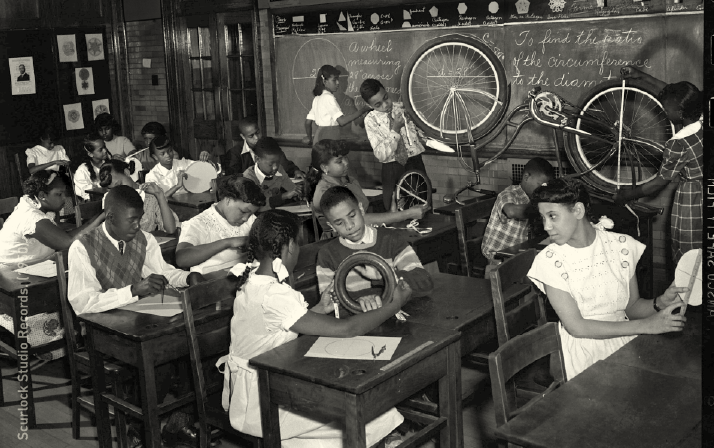
After decades of using the same playbook, math education is facing a moment of reckoning. Driven by declining test scores, pandemic learning loss, and the rise of artificial intelligence, there’s a growing movement to enact broad reform in states across the country. Many efforts to improve math education fail to learn from history, particularly the history of inequitable math opportunity.
In particular, Black students have been disproportionately excluded and tracked away from high-quality math-learning opportunities for generations. This history manifests in the disparities we continue to see today.
Calculated Barriers traces the roots of math inequities, emphasizing that it is educational policies and practices that have driven differential math outcomes for Black students throughout history. From tracking Black students into lower-level math courses during desegregation to disproportionate assignment of Black students to college remedial courses after the Higher Education Act of 1965, the report documents seminal events that have constrained Black students' access to quality math education. History also shows Black students excel in math when granted access and given equitable opportunities.
To eliminate math disparities and transform math education from a gatekeeper to a gateway of opportunity, the report offers policy recommendations aimed at removing barriers to advanced courses, ending lengthy college prerequisite sequences, investing in culturally responsive instruction, and aligning policies across K–12 and higher education systems.
For more insights on the role of math in ensuring educational equity, subscribe to Just Equations’ newsletter.
